Searching For Mother In St. Paul de Vence
At a museum in the south of France, a son searches for the spirit of the mother who taught him how to see art—and what beauty could give him.

I came to the Maeght Foundation in St. Paul de Vence on France’s Cote d’Azur on a chilly and wet April afternoon, searching for the spirit of my late mother, who loved museums, who understood art, and who may well have loved this museum most of all.
I wanted to hear her voice again. She passed six years ago and I hear her speaking only in dreams. We bonded over art, music, and books. She didn’t just go to museums because cultured people were supposed to go to museums. She went because she had a sixth sense for what painters and sculptors were trying to say.
My mother never studied art in a formal sense but she could stand before an artwork and point out a choice the artist had made – a patch of color, a line, something left in or left out. She wasn’t simply going to a museum to tick a box – I saw a Picasso, I saw a Monet. She wasn’t saddled with the typical blinding reverence most of us possess for the celebrity of famous artists. Instead, she could see what the artists saw. When I took her to museums, I delighted in the joy she found in the grace of the works they made.
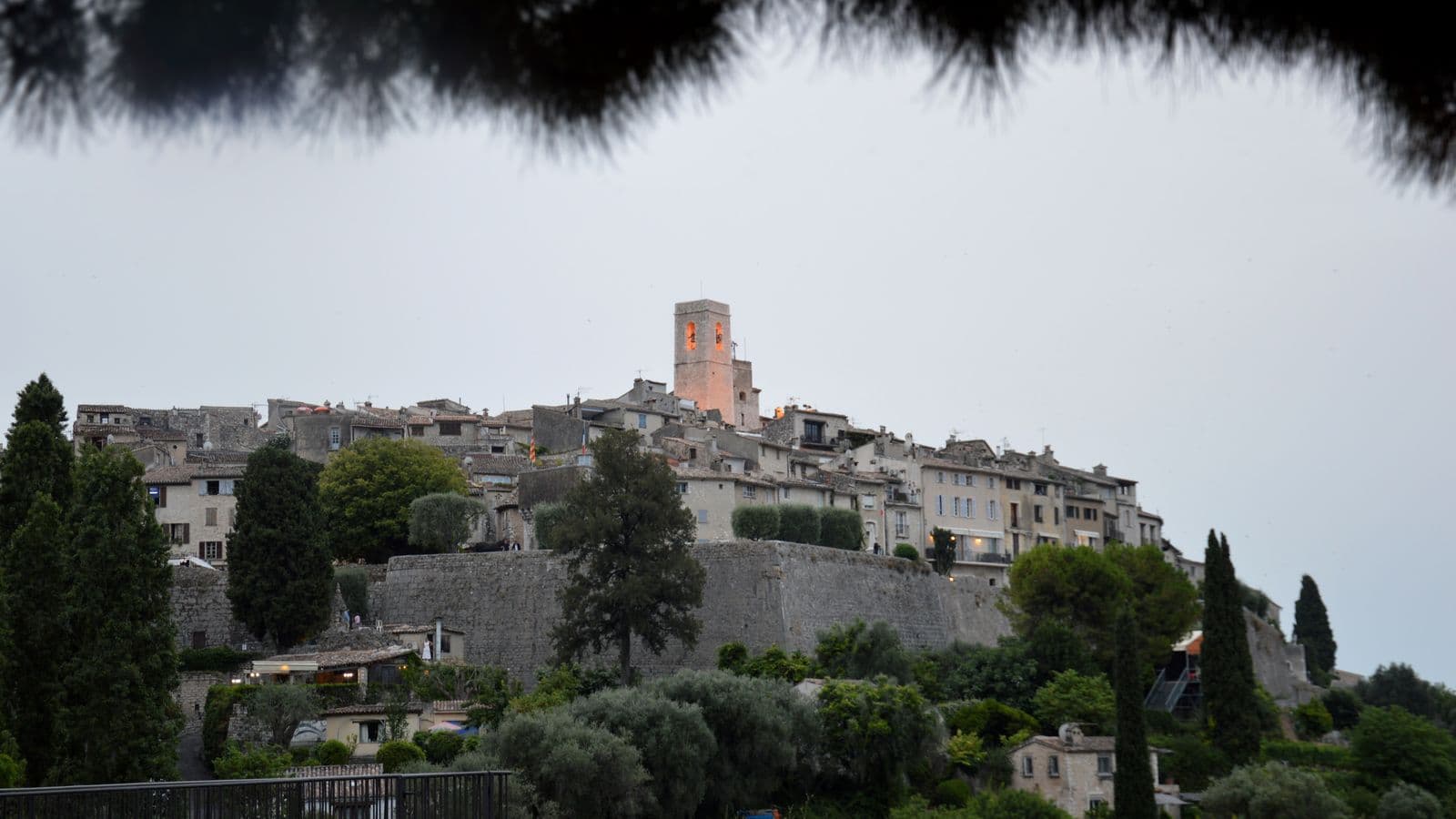
The Maeght Foundation isn’t a museum tourists in nearby Nice visit to get out of the sun or the rain, unlike the three-hour admission line the day before at that city’s Chagall Museum. Instead, you have to really commit to getting there. It’s a half hour taxi or Uber ride from center city, at the top of a high hill, surrounded not by cafes and boutiques but by ancient stone farmhouses with nothing for visitors other than quiet charm.
So I seized a chance to visit the Maeght, which Mom adored, not so much to look at art but instead to seek my mother’s spirit, the intensity of her gaze as she studied a sculpture or a painting and saw things far beyond anything I could see.
The Maeght was founded by a wealthy Frenchwoman after the death of a young child. She toured the world looking at private collections, including the Barnes Foundation and Guggenheim Collection in the United States, before settling on a Spanish architect friendly with Joan Miro to design her monument to art. The collection is replete with mid-century brand-names – Chagall, Miro, Picasso, Braque, Calder, Giacometti, Fernand Leger.
I never visited the Maeght with my mother. So I had no personal memories of her admiring the art. I simply went to see if I could sense her presence, standing quietly before this work or that, noticing the things the rest of us didn’t see, couldn’t see.
I wondered as I entered, as I often wonder, when we visit a place, whether we leave a particle of our own existence behind, to be revisited by ourselves or others at a later date. Or once we’ve cleared out, do we leave nothing of ourselves behind?
I confess that most of the pieces at the Maeght left me, well, confused. I found myself nodding in recognition of the styles of many of the great artists, but more in the sense of, “Oh, that’s a Calder,” or “Oh, that’s Chagall.” Try as I could, I lacked the ability to see beyond the brand names, beyond the box-checking of a typical museumgoer. When it comes to art, as to many other things, I’m not Mom.