Can The Marathon Give Charity Runners A Better Run For Their Money?
Charity runners raise millions for the Boston Marathon. They should not lose water, tracking, security, and other basic race services before they finish.

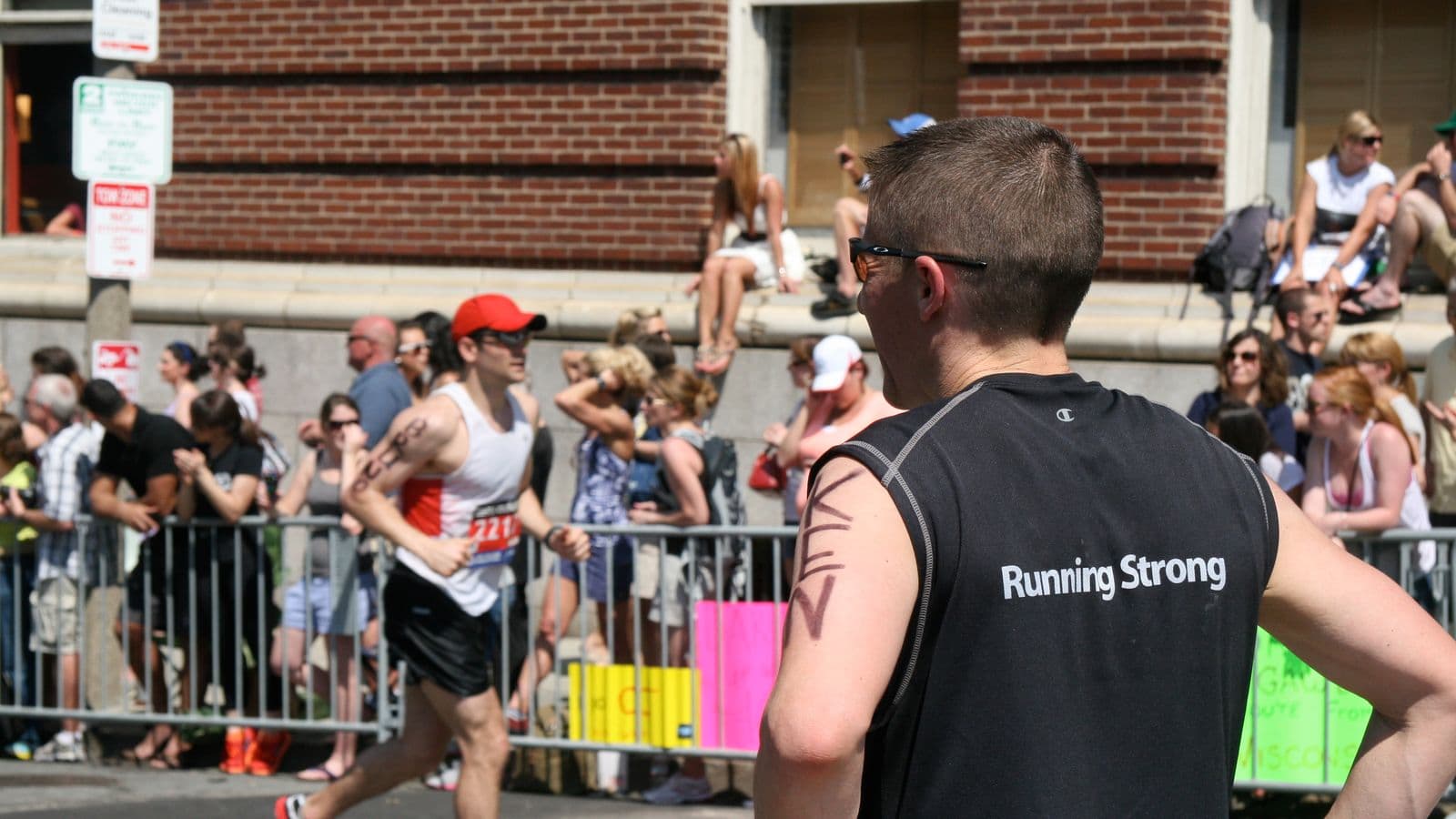
It’s time for the B.A.A. to extend a little charity to its Boston Marathon charity runners.
More than 3,000 charity runners each year raise a total of $50 million for more than 100 charities.
It’s a huge win for everyone – runners (like me) who are too slow to time qualify can participate in the greatest road race in the world.
Charities receive huge amounts of funding from a wide variety of old and new donors.
Charity runners honor the memories of loved ones who have passed away from various diseases, inspiring spectators and other runners alike.
We make up roughly 10 percent of the total number of Boston Marathon runners, which now exceed 30,000 each year.
We pay extra for the privilege. In addition to our fundraising commitments, which typically run to $10,000 to $15,000 per runner, we pay $385 as an entry fee, $125 higher than the $260 that time-qualifying runners pay.
Our hats our off to those amazing athletes who can time-qualify. Men under 34 need to run a sub-2 hour, 55 minute marathon in another city. Women and non-binary must run faster than 3 hours 25 minutes.
A few of us (not me!) could time qualify, but most of us are back-of-the-packers and just happy to be out there.
I’ve raised almost $250,000 for Dana-Farber and for Achilles International, but I’m still slow as molasses. We all have our strengths.
So here’s what I mean by a little charity for the charity runners.
Most of us go off in the last waves, which means that by the time we get to the Newton Hills, all of the accoutrements of the race are gone.
Water stations? Gone.
Porta-potties? Mostly gone.
Mile markers? Race photographers? Timing belts? Security? Fencing?
All gone.
It’s disheartening to see those things vanish while you still have 10 hard miles to go.
It’s painful to have friends unable to track you because the entire tracking system’s been shut down.
They think something’s happened to us.
It’s a health issue because the medical stations may still be operating, but they are no longer watching for runners who really ought to quit but won’t stop.
It’s a safety issue because the roads reopen to vehicular traffic.
We get it. The race is really intended for the elite athletes and those fast enough to time quality, and we’re just fortunate to be out there.
But it’s not fair. We paid even more than the “real” runners...and we don’t have the benefit of the vital services that make a marathon fun and safe.
What to do? How exactly can the B.A.A. extend some charity to those of us who run for charity?
Here are some ideas.
Send us out in earlier waves. Maybe make us keep to one side of the course so we don’t get in the way of the faster racers.
Keep the water stations, fencing, and other necessary items open longer.