Berlin and the Quiet Closing of a Door
The disappearance of a visibly Israeli restaurant after sustained intimidation raises a larger question about whether Jewish public life is again being pushed into retreat.
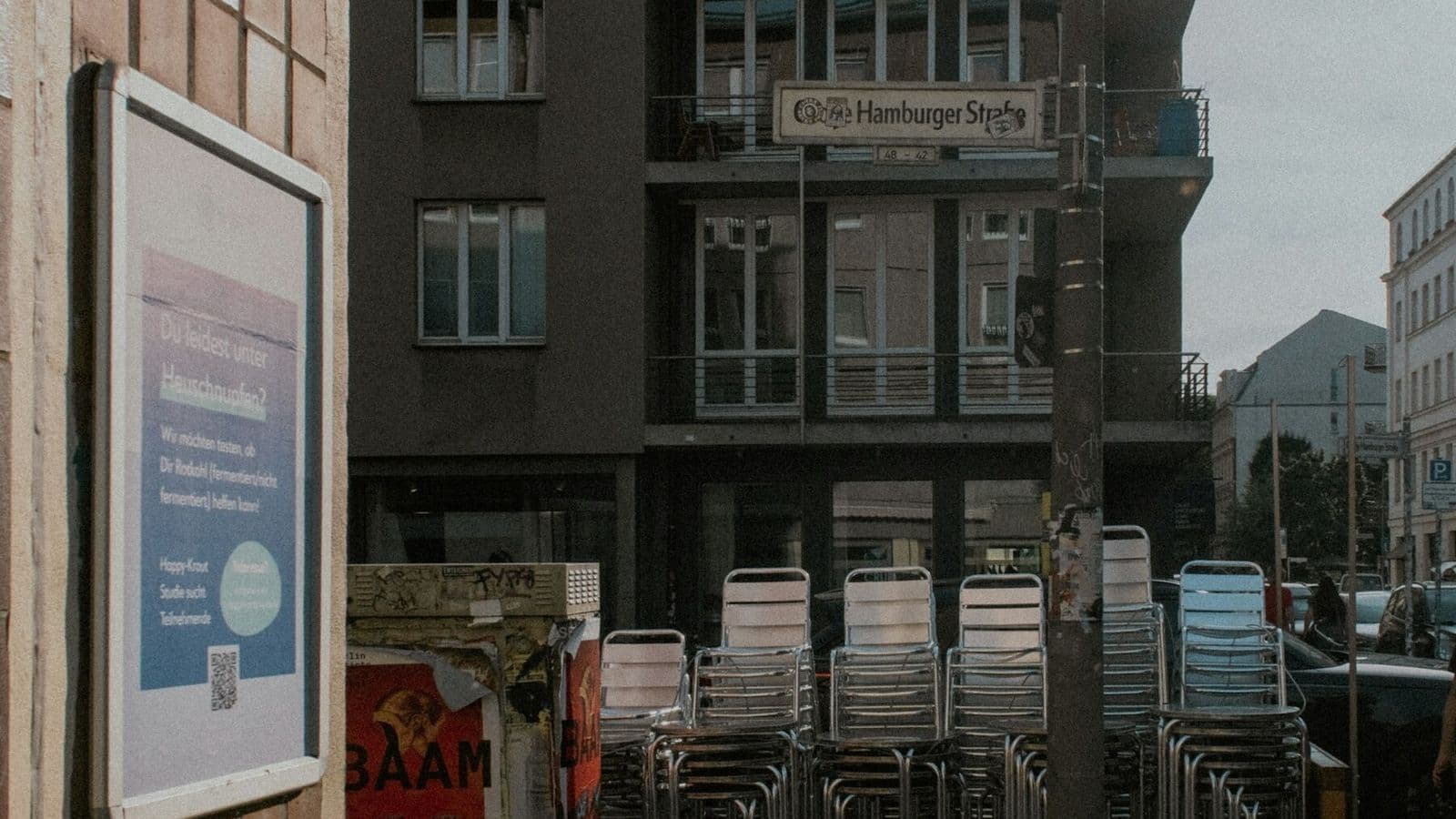
In September 2025, Israeli chef Eyal Shani opened a restaurant in Berlin. By April 2026, it was gone.
The restaurant, Gila & Nancy, did not close because it failed to attract customers or critics. It closed after months of sustained protests, harassment, and threats directed at its staff and patrons. Demonstrators gathered outside. Graffiti invoked violence. Online messages blurred the line between political expression and antisemitic intimidation. Eventually, the pressure achieved its aim.
A restaurant was made to disappear.
It would be tempting to treat this as an isolated incident tied to the broader polarization surrounding the war in Gaza, now months into a ceasefire. But that would deflect from an unsettling truth. What happened to Gila & Nancy shows something more troubling about today’s Germany: A shift in what is tolerated in the public square, and who is no longer defended.
Today, in the capital of Europe’s most powerful economic engine, police are investigating graffiti reading “Kill all Jews,” sprayed onto residential buildings. This is not coded language or debated “river to sea” lingo. It is not shorthand political critique. It is a direct call for violence, splashed on a wall for all to see.
Berlin is not alone. In Cottbus, a swastika was recently displayed in a public setting, a warning signal too few are heeding: Hate symbols once consigned to the dustbin of history are reappearing in everyday life. Germans would be wrong to treat these as disconnected incidents.
They are not disconnected, at least not for Germany’s deeply worried Jews. They did not need the comprehensive 2026 assessment of Jewish communities in Germany describing their “new normal” to understand what is happening. Persistent and growing insecurity has taken hold. A majority of communities report that life has become less safe since October 7, 2023. Only 13% of Jewish communities see a positive future in Germany. Jewish public visibility is declining. Events are being canceled. Solidarity from wider society has clearly eroded.
This is the time for fellow Germans to show solidarity with their Jewish neighbors.
When intimidation shuts down a business, when open calls for violence appear on city streets, and when a minority community begins to withdraw from public life—not by choice, but out of necessity—you have the beginnings of a dangerous road: a future Germany increasingly without Jews.
God forbid: No gas chambers, no Einsatzgruppen, no Nuremberg Laws. Just the slow, steady strangulation of Jewish life caused by burgeoning hatred and dehumanization spread by political extremists infiltrating mainstream politics, antisemitic elements within cultural elites, and Islamist hatred backed by genocidal regimes from Iran to Qatar.
The most powerful blows against German Jews are not slogans chanted, words uttered, or tweets posted. The most powerful weapon is one Jews have little ability to stop: the silence of neighbors, the apathy of the mainstream, the snickering of parts of the media, and a system that too often fails to hold perpetrators of hate accountable.